


The thermostat is calling for heat, snow is gathering along the driveway, and the gauge on your oil tank is lower than you expected. If you're a first-time oil-heat homeowner in Lebanon or elsewhere in Eastern Connecticut, that moment can feel urgent. You may be wondering whether to order now, how much fuel the tank can hold, whether the truck can reach the fill pipe, or what happens if the weather turns dangerous before delivery arrives.
Home heating oil delivery is more than a truck bringing fuel to your property. It's a system that connects winter comfort, tank condition, delivery timing, payment planning, and emergency service. The right approach reduces the chance of a run-out, helps protect your home from leaks, and gives you a practical plan for an aging boiler, furnace, or oil tank.
Heating oil remains an important winter fuel in the Northeast. During the winter season of 1999 to 2000, about 78% of nearly 6 billion gallons of distillate sold to U.S. residents went to Northeast customers, according to U.S. Energy Information Administration historical data. Although the market is changing, many Eastern Connecticut homes still depend on oil systems today. This guide will help you understand how delivery works, compare automatic, scheduled, and on-call service, plan payments, monitor tank safety, and choose a provider for both immediate needs and long-term system care.
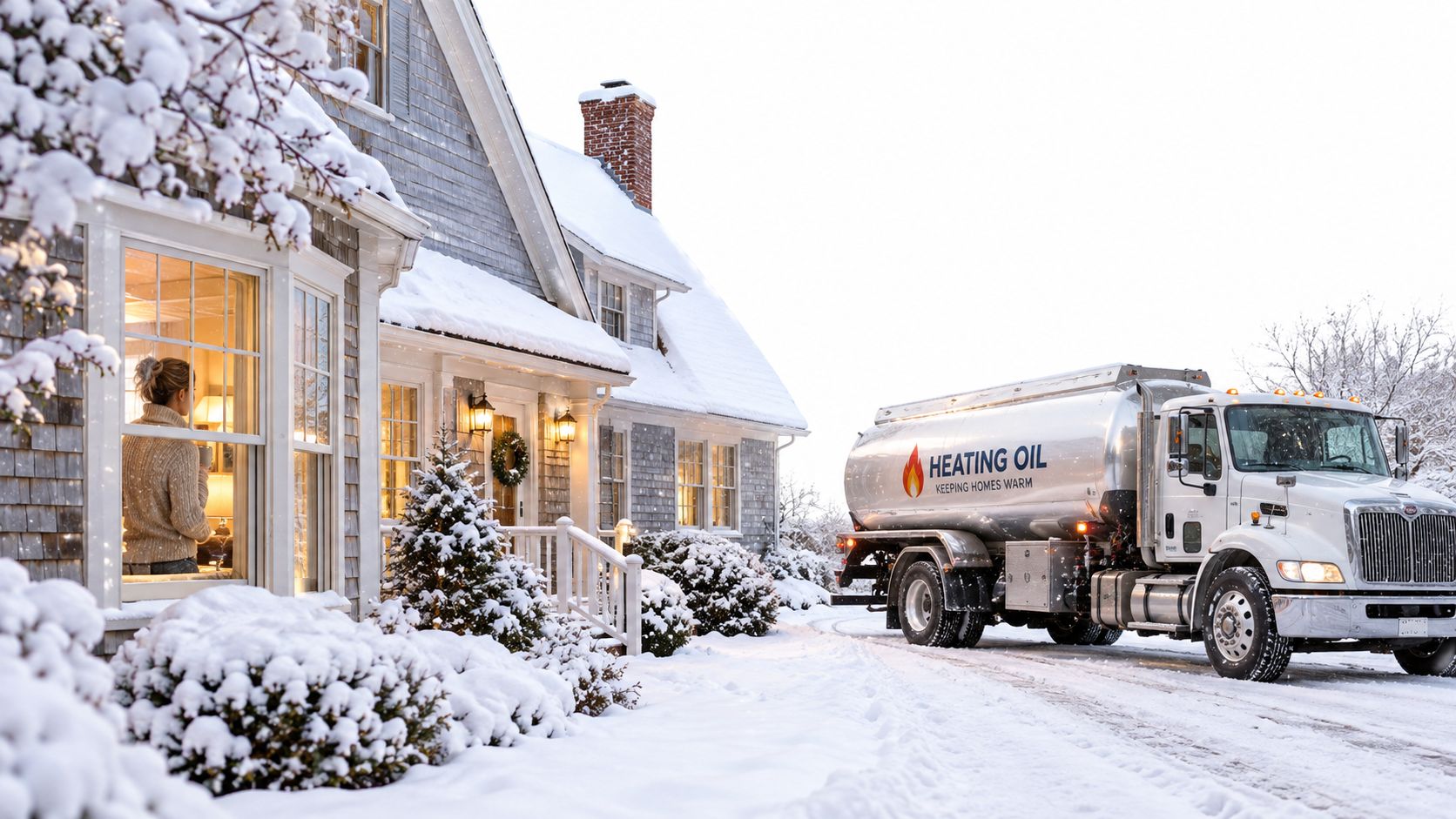
Introduction to Home Heating Oil Delivery in Winter
A low gauge in mild weather leaves room to plan. During several freezing days, the same reading carries more risk. The boiler or furnace may run longer, delivery routes can slow because of weather and road conditions, and a delayed order may leave the home without heat if the tank reaches empty.
Treat fuel delivery as part of a household safety routine, not an occasional purchase. The tank holds your reserve, the gauge provides an imperfect warning, and your delivery arrangement determines how that reserve is replenished. If the system shuts down, adding fuel may not be enough. The burner may also need service before heat returns.
Winter planning also has a cost and supply component. Heating oil prices and availability can change quickly. Past market volatility helped prompt federal action to create a Northeast heating oil reserve capped at 2 million barrels, or 84 million gallons. That history does not predict current prices, but it shows why a winter plan should allow for changing conditions instead of assuming fuel will always cost the same or arrive on the same schedule.
A practical starting point for new homeowners
Before selecting a delivery arrangement, locate three items:
- The tank gauge: Learn whether it shows a fraction, a percentage, or another approximate level. Treat it like a car's fuel gauge, useful for planning but not a precise measurement of remaining fuel.
- The fill and vent pipes: Identify where the driver connects the hose. Check whether snow, parked vehicles, gates, or landscaping could block access.
- The service contact: Keep ordering and emergency information available during a storm, when searching for it may be difficult.
If you are still learning the basics, this plain-language guide to what home heating oil is explains the fuel before you decide how to manage deliveries.
The right choice depends on how often the home is occupied, how reliably you can check the gauge, the condition of the tank and heating equipment, and how much interruption your household can tolerate. A household that travels frequently may benefit from automatic service because it reduces reliance on regular manual checks. A landlord may prefer predictable scheduling and written access instructions. A hands-on homeowner may choose on-call ordering, provided the gauge is monitored and orders are placed early enough for winter conditions.
For an older tank or heating system, delivery choice is also part of long-term service planning. Regular attention can reveal access problems or equipment concerns before a weather swing turns them into an emergency.
How Home Heating Oil Delivery Actually Works
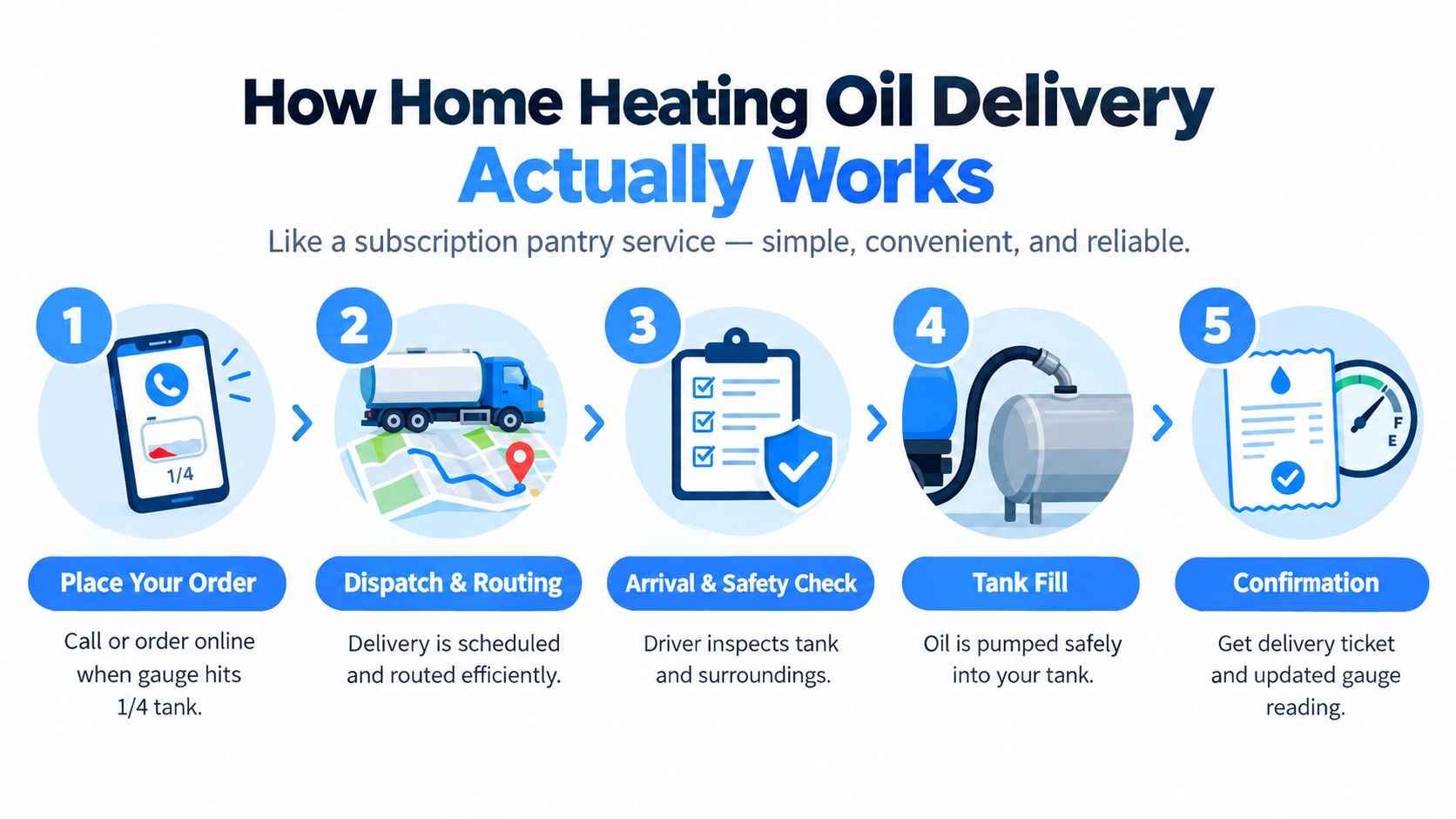
A delivery is easier to understand if you compare it with a pantry service. You place an order when supplies are getting low, the company plans an efficient route, the driver brings the fuel, and you receive confirmation of what was delivered. The difference is that heating oil requires a safe connection between the truck and a fixed tank, so access and tank condition matter.
From request to route
The process generally follows these stages:
- You place the order. You provide your address, account details, requested amount or fill instruction, and any access notes. If you're enrolled in automatic service, the provider estimates when fuel is needed from your usage history, weather patterns, or tank-monitoring information.
- The office dispatches the delivery. A dispatcher groups nearby stops and assigns a route. During active winter weather, timing may be affected by road conditions, customer demand, and safe truck access.
- The driver checks the property. The driver locates the fill pipe and vent, checks the surrounding area, and looks for obvious access or tank problems. The driver may not need to enter your home when the fill connection is outside.
- The driver connects the hose and fills the tank. The fill pipe provides the fuel path, while the vent allows air to leave the tank as oil enters. The driver monitors the equipment and stops at the requested amount or when the tank's filling indicator shows that it is full.
- You receive delivery confirmation. The meter and ticket document the quantity delivered and other account information. Afterward, check that the fill cap is secure and the gauge reflects the expected change.
What you should do before arrival
Keep the fill area clear of snow, ice, branches, stored materials, and vehicles. If the pipe sits behind a gate, make sure the provider knows how to reach it. Secure pets and share unusual instructions, especially if the driver must use a side entrance or a long driveway.
Practical rule: The driver needs a safe path to the fill point more than you need to be home.
A delivery ticket is useful for more than billing. It helps you track when the last fill occurred, compare your household's seasonal usage, and notice whether the gauge appears to be behaving normally. If the driver can't deliver the full requested amount because of tank capacity or a safety concern, the ticket should reflect what happened.
Comparing Automatic Scheduled and On Call Delivery Options
The three common arrangements place responsibility in different hands. Automatic delivery gives the provider more control over timing. Scheduled delivery creates a predictable calendar. On-call delivery gives you direct control, but it also makes you responsible for monitoring the tank and ordering early.
Weather makes this decision less simple than it first appears. The International Energy Agency described a winter in which a very cold December was followed by a very warm January, with heating-degree days falling below the prior year's level. It estimated that the shift produced only about 150 thousand barrels per day of additional heating-oil consumption, showing how quickly weather patterns can change demand without creating a straightforward forecast. You can review the context in the IEA Oil Market Report.
Side-by-side comparison
| Feature | Automatic Delivery | Scheduled Delivery | On-Call Delivery |
|---|---|---|---|
| Who watches usage | The provider estimates demand using account history and other available indicators. | You and the provider follow an agreed interval or calendar. | You monitor the gauge and decide when to order. |
| Convenience | Highest for homeowners who don't want to track fuel closely. | Convenient when your household follows a stable routine. | Requires regular attention, especially during cold weather. |
| Control | Less control over the exact delivery date and amount. | More predictable timing, with less day-to-day monitoring. | Highest control over when and how much you request. |
| Run-out risk | Lower when the account information and usage pattern are accurate. | Manageable if the schedule remains appropriate for actual weather and occupancy. | Higher if you forget to order or wait too long. |
| Best fit | Frequently occupied homes, busy households, or owners who travel. | Properties with consistent occupancy or managed maintenance calendars. | Homeowners who actively track the gauge and plan ahead. |
| Main caution | Unusual occupancy, equipment changes, or a faulty gauge can affect estimates. | A fixed interval may not match a sudden cold spell or an empty property becoming occupied. | Winter storms and route demand can leave less time between ordering and delivery. |
Choosing based on risk, not habit
Automatic service is usually a strong fit when a run-out would be difficult to manage. It can also help landlords and property managers who oversee more than one building. You should still report major changes, such as a new heating appliance, a vacant property, or a significant change in household occupancy.
Scheduled delivery suits people who like a known routine. It works best when the provider and customer review the arrangement rather than treating the original calendar as permanent. A colder season, a new tenant, or an aging burner can change consumption.
On-call delivery can make sense when you want to choose each order and watch market conditions. It demands discipline. Set a recurring reminder, check the gauge more often during cold weather, and don't wait for the burner to stop before calling.
A delivery model is a risk decision. Choose the arrangement that matches the consequence of being late, not just the option that sounds most flexible.
Ordering Payment and Budget Plans Made Simple
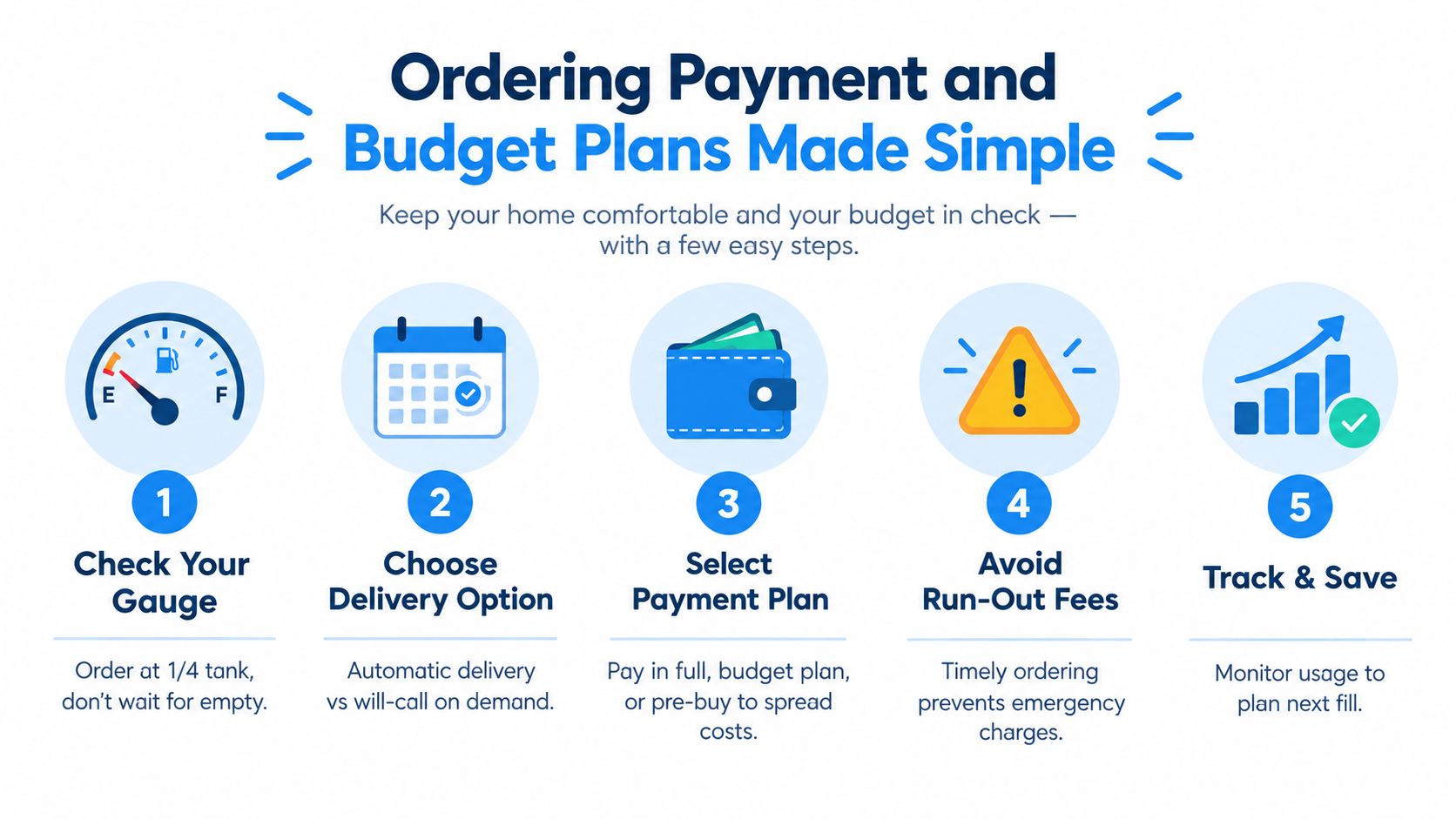
Ordering fuel becomes less stressful when you separate the decisions. First, determine whether the tank needs fuel. Next, choose how the order will be handled. Then, decide how you want to pay. Mixing all three questions together is what makes a routine fill feel confusing.
Start with the gauge. Most residential gauges provide an approximate reading, not a laboratory measurement. The level can also change faster during a cold spell because the burner runs more often. Ordering around the one-quarter mark is a common practical safeguard, but you shouldn't wait that long if a storm is approaching, the tank is older, or delivery access may become difficult.
A simple ordering routine
Use the same checklist each time:
- Read the gauge in good light. Note the level and look for a gauge that appears stuck, cracked, or inconsistent with your recent usage.
- Check the access route. Clear snow and ice from the fill pipe and make sure gates or driveways won't block the truck.
- Choose the order type. Ask whether you need a full delivery, a specified amount, or the next automatic stop.
- Confirm account details. Provide current phone information, property instructions, and any change in occupancy.
- Save the ticket. Record the delivery date and amount so you can recognize unusual usage later.
A homeowner in Lebanon may use more fuel during a cold week than during a mild one, while a neighboring property may use less because of insulation, thermostat settings, or a newer boiler. That's why a single delivery amount can't reliably predict the next one. Your own ticket history is more useful than a generic rule.
Making the bill easier to manage
Payment options vary by provider, but homeowners commonly ask about paying in full, arranging a budget plan, or using an available pre-buy or bulk-purchase arrangement. A budget plan can turn irregular deliveries into a more predictable household expense, while bulk arrangements may be useful for customers who can plan ahead. Ask what happens if your usage differs from the estimate, and confirm whether a plan includes service benefits or only payment scheduling.
The heating oil payment plan information can help existing customers understand one local approach. Before enrolling in any plan, ask for the billing schedule, adjustment policy, delivery terms, and any conditions that apply during a high-demand winter.
Before you agree: Make sure you understand whether the plan changes your delivery arrangement, your service access, your payment timing, or only the way the fuel bill is spread out.
Don't ignore a run-out warning because you're concerned about the invoice. Calling early gives the provider more scheduling flexibility and gives you time to ask about payment arrangements. Waiting until the burner stops can add urgency to an issue that could have been handled calmly.
Tank Safety Monitoring and Leak Prevention Essentials
A clean, sound tank supports both fuel quality and dependable burner operation. Water contamination can accelerate fuel degradation, and copper exposure can worsen that problem during long-term storage. Canadian fuel specifications advise that storage tanks should be clean, free of water, and maintained in cool, dry conditions, with free water drained regularly and metal deactivators used when copper is present. These requirements are described in the Canadian fuel specification document.
The practical result is easy to understand. Fuel that picks up water or deteriorates can form sludge, plug filters, and make the burner less reliable when winter demand is highest. Automatic delivery can't solve a tank problem. It can only keep adding fuel to a system that still needs inspection and maintenance.
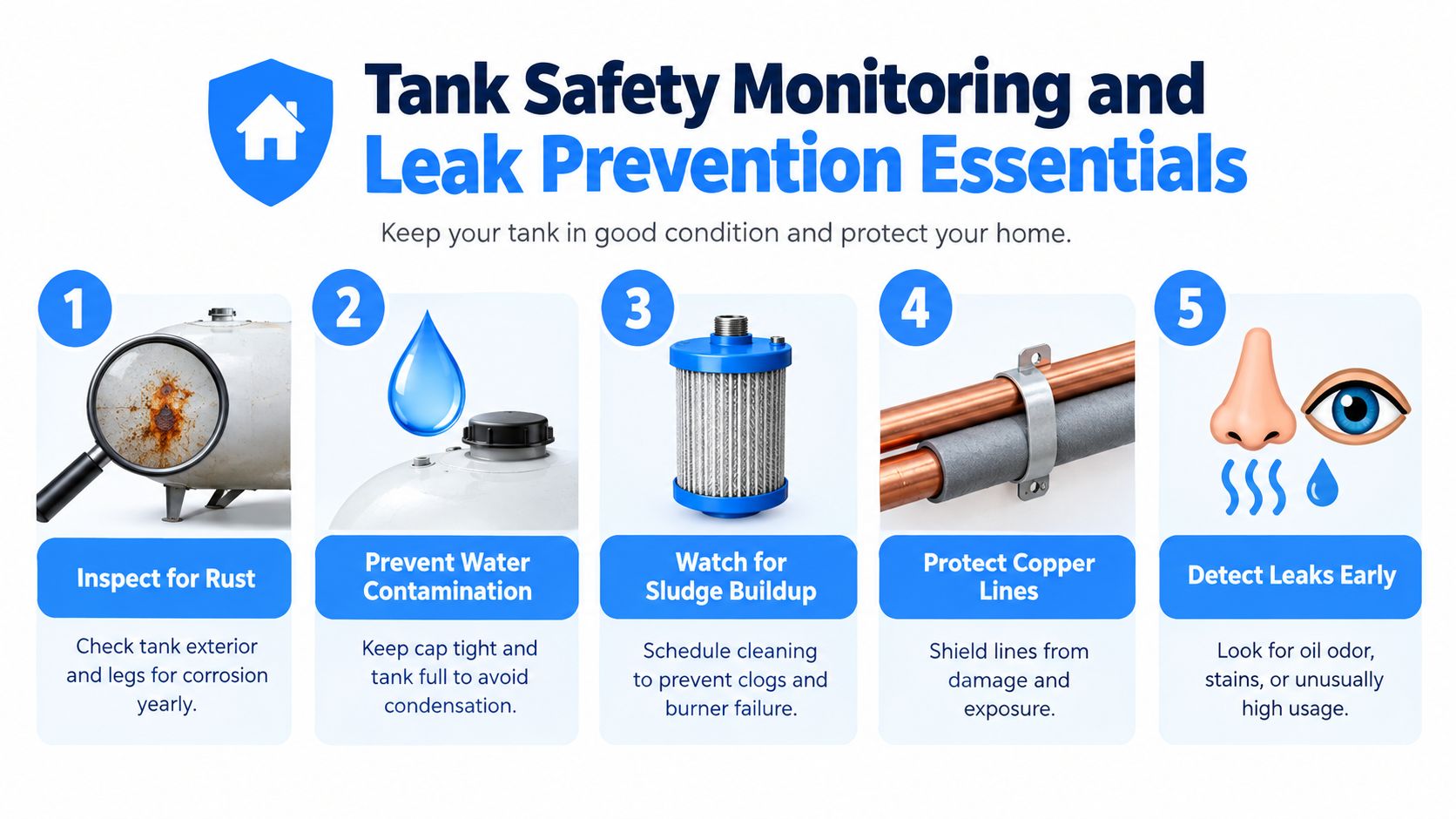
What to inspect before the heating season
Walk around the visible tank and its connections, but don't disturb fittings or attempt repairs yourself. Look for:
- Rust or corrosion: Pay attention to the tank bottom, legs, seams, and nearby piping.
- Oil odor or staining: A persistent smell, wet spot, or darkened surface deserves prompt professional attention.
- Water and debris: Keep the fill and vent caps secure, and ask a qualified technician to address suspected water inside the tank.
- Damaged lines: Copper or other fuel lines should be protected from impact, abrasion, and moisture.
- A questionable gauge: A reading that never changes or doesn't match your delivery history may not be giving you a reliable warning.
The U.S. Environmental Protection Agency excludes residential heating-oil tanks used on the premises from federal underground storage tank rules, but that doesn't remove the responsibility to respond to a leak. State requirements may call for immediate reporting, and homeowner guidance in New York advises checking fuel-oil tanks before the heating season to help prevent leaks and spills. The New York environmental guidance also highlights the potential for releases to affect basements, groundwater, wells, and soil.
Why the driver may pause a delivery
A provider may need to verify tank integrity before filling, especially with an older basement or underground system. That isn't unnecessary interference. Filling a compromised tank can turn a visible maintenance issue into a larger release, and cleanup costs may not be covered by insurance.
For a deeper inspection of your equipment, review the local fuel-oil tank inspection service. A pre-season inspection, filter service, and burner tune-up create a stronger foundation for whichever delivery option you choose.
Delivery Area Emergency Service and Seasonal Planning
Eastern Connecticut weather can change the delivery problem overnight. A clear driveway may become obstructed, a normal route may take longer, and a household that seemed well supplied may use fuel more quickly during sustained cold. A sound plan combines delivery timing with access preparation, equipment maintenance, and a clear understanding of emergency coverage.
Ask a provider what its delivery area includes, how it handles storms, and which customers qualify for emergency response. Service contracts can provide predictable maintenance and priority response, while enrolled oil customers may have access to round-the-clock emergency service. Those details matter most before you need them, not after the burner has stopped.
Prepare the property as well as the account
Before winter, confirm:
- Route access: Clear the driveway, fill pipe, and turning area of snow, ice, branches, and vehicles.
- Contact details: Make sure the provider has a current phone number and any gate or access instructions.
- Equipment status: Schedule a burner tune-up and address unusual noises, odors, repeated resets, or uneven heating.
- Tank plans: If the tank shows corrosion or sits in a vulnerable location, discuss repair, replacement, and related site work before peak demand.
Long-term planning matters because the oil-heated housing stock is changing gradually, not disappearing overnight. Market reporting estimated that roughly 7 million U.S. homes and 20 million European homes still relied on heating-oil systems in 2025, even as new adoption slowed, according to the published market overview. That leaves many homeowners managing an existing system while considering future upgrades.
An oil customer may eventually compare a replacement boiler, a different heating system, improved insulation, or backup power. If you're also weighing resilience during outages, a guide to which home battery is best can help you think through backup power separately from fuel delivery.
Keep transition decisions practical
You don't need to make every long-term energy decision during a winter emergency. Maintain the current tank and burner, get written estimates for major work, and compare replacement timing with the condition of the equipment. A service provider that handles both fuel and HVAC can help coordinate delivery, tank replacement, burner work, and future heating choices around your property's actual needs.
Why Choose a Local Provider Like Benders Oil Service
A local provider can connect the daily delivery task with the larger condition of your home heating system. That matters when a low gauge appears alongside a failing burner, a blocked driveway, or a tank that needs replacement. You want one conversation to identify the immediate fuel need and the next maintenance step, rather than treating every problem as unrelated.
Bender's Oil Service Inc is a family-owned provider based in Lebanon, Connecticut, with more than 70 years in business. Its service footprint includes Lebanon and surrounding Eastern Connecticut towns, and its licensed fuel and HVAC technicians work on boilers, furnaces, burners, water heaters, and oil storage tanks. The company offers automatic, scheduled, and on-call heating oil delivery, along with online ordering for existing customers, budget plan arrangements, bulk discounts, free estimates, tank installation and replacement, and service contracts.
Local service solves local problems
A provider with a physical local presence can account for the practical details that generic ordering systems may miss. Drivers can use documented access instructions, office staff can discuss account changes, and technicians can connect delivery concerns with equipment service. That becomes especially useful when the home has an aging tank, a hard-to-reach fill pipe, or a heating system that needs attention before the next cold spell.
Bender's also provides 24/7 emergency service for enrolled oil customers, documents delivery performance during harsh weather, services major equipment brands, and honors manufacturer warranties on air-conditioning equipment. Those offerings don't eliminate winter risk, but they give homeowners more ways to manage it before a small issue becomes a service interruption.
If your gauge is dropping, your tank needs inspection, or your payment schedule doesn't fit your winter budget, contact the office before the next storm. Ask for a delivery estimate, discuss automatic or scheduled service, review budget plan options, and schedule a tank or burner inspection if the equipment is aging.
Bender's Oil Service Inc offers home heating oil delivery, automatic, scheduled, and on-call options, plus tank inspections, HVAC maintenance, budget plans, and emergency support for enrolled oil customers. Visit Bender's Oil Service Inc to request an estimate, review delivery choices, and make a practical winter service plan for your Eastern Connecticut home.